

Investment letters
JAPAN EQUITIES: WHEN THE YEN MOVES, OUR APPROACH STAYS THE COURSE
08-Oct-2026

Richard Kaye
Analyst / Portfolio Manager
Key Takeaways
- This summer’s direct U.S. intervention to support the yen – the first since 1998 – triggered a sharp, short-lived, appreciation
- We view this, and yen weakness more broadly, as cyclical rather than a reflection of Japan’s long-term investment potential
- In our view, foreign exchange markets tend to be a distraction from our goal of identifying quality growth companies
- Our research focuses on companies strengthening corporate governance, reinventing themselves through innovation and benefitting from the return of domestic investors
WHAT IF THE WEAK YEN IS NOT THE STORY?
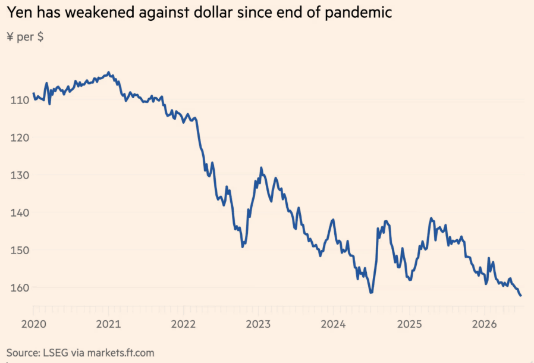
Source: “Why the ‘Dirt Cheap’ Yen Is Proving Hard to Fix.” Financial Times, 14-Aug-2026.
The Japanese yen has become impossible to ignore since this summer. After falling to its weakest level against the U.S. dollar in four decades, the currency prompted a rare coordinated US-Japan intervention and renewed scrutiny from investors and policymakers.1 Since the end of the COVID-19 pandemic, the yen has depreciated significantly against the dollar, as shown in Figure 1.2 This decline also triggered warnings from U.S. Treasury Secretary Scott Bessent, who declared that “disorderly yen markets can trigger forced unwinds, which could destabilise global markets.”3 For long-term investors, however, the yen may be the loudest part of Japan’s current story, but not necessarily the most important.
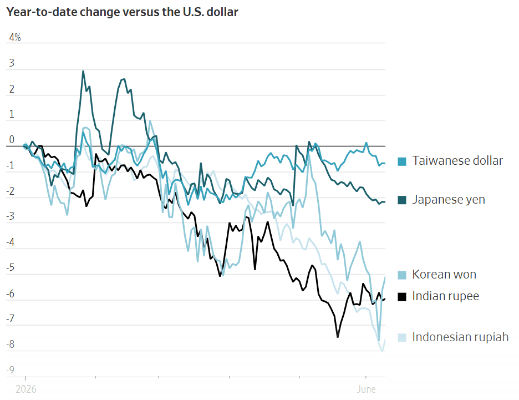
Source: “Why Asian Currencies Are Taking a Beating, in Charts.” Wall Street Journal, 13-Jun-2026.
While the Japanese yen has dominated financial headlines, other non-pegged Asian currencies have fared similarly, weakening against the dollar over the past year. Despite a booming market for semiconductor chips,4 the South Korean won hit a 17-year low following chipmaker SK Hynix’s decision to list in the U.S.5 Even before the intervention, other Asian currencies, including the Taiwanese dollar, Indonesian rupiah and Korean won all declined against the dollar, reflecting a combination of rising U.S. interest rates, energy-market disruption linked to the Strait of Hormuz and spending on artificial intelligence (AI), as shown in Figure 2. In our view, the yen’s weakness is therefore better understood as a cyclical development rather than evidence of something structurally wrong with Japan.
As quality growth investors, movements in the Japanese yen tells us relatively little about the underlying bottom-up fundamentals that we look for in companies. For us, the more important story is whether companies possess durable competitive advantages, pricing power and structural growth potential – the quality growth characteristics that we believe should help them withstand periods of macroeconomic and market disruption.
Footnotes
- Setser, Brad. “Why the U.S. Intervened to Prop up Japan’s Yen.” Council on Foreign Relations, 4-Aug-2026. ↩︎
- Keohane, David, and Ian Smith. “Why the ‘Dirt Cheap’ Yen Is Proving Hard to Fix.” Financial Times, 14-Aug-2026. ↩︎
- Gale, Alastair, and Greg Ritchie. “Bessent Says a ‘disorderly Yen’ Would Risk Higher U.S. Rates.” Bloomberg, 29-Aug-2026. ↩︎
- Douglas, Jason. “Why Asian Currencies Are Taking a Beating, in Charts.” Wall Street Journal, 13-Jun-2026. ↩︎
- Tudor, Daniel, and William Sandlund. “Traders Braced for Won Volatility after Blockbuster SK Hynix Listing.” Financial Times, 13-Jul-2026. ↩︎
